With the trekking season coming in, deciding the best location to trek is no less than a hassle, especially when you have an option like the Annapurna Circuit Trek and Thorong Peak climbing. But, how amazing would it be if you could go on both treks in a single journey? You can come out of your imagination now because you can do that with our Annapurna Circuit trek and Thorong Peak climbing package. You will be visiting two of the major locations in Nepal for trekking on this journey.
To know more about either of the journeys, including what you can expect from them and how difficult it is going to be, be sure to read till the end of this article!
Annapurna Circuit Trek Overview
Annapurna Circuit Trek is all about taking a round in the Annapurna Himalayan range. The journey can be as fascinating when practically done as it may sound. This trek is considered to be slightly more challenging than the Annapurna Base Camp trek, which further makes it an excellent choice for those who are looking for an adventure in the Himalayas. More often than not, expert-level trekkers don’t like to take on easy journeys. Hence, a journey like this one just might be suitable for someone as enthusiastic as you (given you have prior expertise in mountaineering).
You will pass by Gurung villages, subtropical forests, Rhododendron trees, and alpine meadows, and travel through more than one climatic condition, beginning from a warmer location to a cooler one and vice versa. Furthermore, the altitude ranges from 800 meters to 5,400 meters above sea level. Trekkers need to keep in mind that staying conscious from the beginning till the end of the trek is going to be nothing but helpful.
Thorong Peak Climbing Overview
Thorong Peak is known for its breathtaking view worldwide. When you are trekking in the Annapurna region, going to Thorong Peak can be fruitful and immersive for you. With an elevation of 6,144 meters above sea level, Thorong Peak climbing is a thrilling journey that is made for those with the heart of a lion. We are calling out the brave hearts to join us in this amazing trek for a reason! You will be able to witness panoramic views of mountains like Annapurna Panorama and Kali Gandaki Gorge, and diverse terrains along the way.
Also, trekkers can expect to get an insightful tour of the Tibetan culture. You will get just as amazing of sight of the hillsides, narrow pathways that you will also be crossing in this journey, and rocky, rugged trails. Moreover, you can also enjoy the green vegetation with the alpine meadows on your way. Some of the cultural interactions that you will have on this trip include Gurung, Thakali, Manangi, etc.
Why Combine Annapurna Circuit Trek with Thorong Peak Climbing?
There are several reasons why you may want to combine the Annapurna Circuit Trek with Thorong Peak Climbing. First of all, you will not be disappointed by the aesthetic elements of this trek, combined. From the Himalayan views to the villages and the hospitality that you will experience each step of the way, a journey like this one will remain in your memories for all the good reasons, for more than just one reason.
The following are some of the major reasons why you would want to combine the Annapurna Circuit with the Thorong Peak Climbing:
Acclimatization for Safety
The Annapurna Circuit trek combined with Thorong Peak climbing can be a journey worth remembering for all kinds of trekkers, and it’s safe. This gives you the best of both worlds because when you are on a dual trek like this one, you can rest in between the journey at many landmarks. Acclimatizing always increases the prospects for one to stay safe from the beginning to the end of the trek.
Test for Mountaineers
You will be able to test your limits as a mountaineer. If you are a beginner-level mountaineer, then you can most enjoy the trek’s elements while considering the journey a challenge. Testing one’s potential cannot be possible as an adventurer when you only go to the Annapurna Circuit trek because though the journey is immersive, wholesome, and even somewhat challenging, it is not adequate to keep you sweating and testing your limits. And as we say this, we are talking to the adrenaline junkies!
Maximum Value of Trek
Trekking journeys hold great value for trekkers. While even going on a single trekking journey may increase the value of the time and resources you spend on the trails, going on two journeys at the same time. Climbing a mountain is no joke. And frankly speaking, such a journey is not suitable for all kinds of trekkers. When you go on this trek, you will feel a sense of accomplishment on a whole other level, and there will always be something for you to brag about back home.
Panoramic Views from The Summit
It is not just the Thorong Peak summit you will be enjoying the view of. In the Annapurna Circuit trek, you will come very close to the amazing views of the Annapurna range. Likewise, as you summit Thorong Peak, you can get the most beautiful scenery of Annapurna I, II, III, and IV, along with Mount Machhapuchhre and Dhaulagiri. You can also enjoy the view of the Tibetan Plateau and Mustang Valley from atop.
Fewer Crowd
Trekkers can expect a smaller crowd on the trails of Annapurna Circuit Trek with Thorong Peak climbing. The lesser the crowd, the more chances a trekker will get to enjoy their trek in serenity and peace. Even if you are with a group, you won’t face problems in finding the best possible amenities as you do in the trekking trails that are most popular among trekkers. In addition to this, both the Annapurna Circuit trek and Thorong Peak are less crowded trekking destinations, in general.
Confidence Building
Going on a single trekking journey can change your trekking life for good. When you go on a summiting journey combined with a trek around the mountains, there is nothing that will keep you demotivated in the treks and mountaineering trips you are to make in the future. For the adventurers who cannot directly climb Mount Everest, or for instance, simpler eight-thousanders on the first try, going on a multi-trek journey like this one can work best to build your confidence.
Best Time to Go On The Annapurna Circuit Trek With Thorong Peak Climbing
Going on the Annapurna Circuit Trek with Thorong Peak climbing can seem like a very complex journey. And to a level, it can be considered so, if you are a beginner-level trekker. But, selecting the right time to visit can do wonders for a trekker, regardless of their expertise in trekking or mountaineering. The Annapurna Circuit trek combined with Thorong Peak is not appropriate for a destination during the off seasons, like summer, monsoon, and winter, because of the dangers associated with it. However, going to either of the locations during peak seasons like spring and fall can be a great experience.
The following is all you need to know about the Annapurna Circuit trek and the Thorong Peak trail seasons:
Summer/ Monsoon (June to August)
Summer and monsoon can be considered the least favorable seasons for trekking and all for some good reasons. If you are looking to become as comfortable as you can throughout the journey, it would be best if you choose the peak seasons instead. During summer and monsoon, you will feel the heat rise in all regions throughout the country, and though both Annapurna Circuit trek trails, as well as the trails of Thorong Peak, are on the colder side, there is no exception during summer months. Also, you don’t want to become a victim to the constant and unpredictable rainfall which causes delays and makes the pathways slippery and dangerous.
Winter (December to February)
Winter months are somewhat common for advanced trekkers who want to explore the most as adventurers and challenge themselves. But, for the trekkers and mountaineers who do not have as extensive experience in mountaineering or trekking, it would be best to settle for the peak months like autumn and spring as the cold and snowy trails are very dangerous when you don’t know how to conduct yourself on the trails in exceptionally challenging situations. You may also become prone to facing altitude sickness, breathlessness, or witnessing avalanches and heavy snowfall during this season. The trails are not the safest due to these reasons, either.
Autumn (September to November)
Autumn is the most preferred, best season for the Annapurna Circuit trek with Thorong Peak climbing. You will be amazed at how many trekkers plan to visit both destinations in just this season because it’s that favorable! The warm sunny days combined with no rain, are nothing but bliss for the trekkers. You won’t have to face too much heat or too much cold along the trails either. By wearing a suitable amount of clothing, you can withstand the weather. It is always easier to find amenities, including accommodation, food, etc., in both locations during the season. And, there is no rain!
Spring (March to May)
Spring is another favorable season for the Annapurna Circuit trek with Thorong Peak climbing. There is no doubt as to how many aspects you will be falling in love with during this journey. From the beginning till the end, you will have to face the least number of problems. For trekkers who are not as seasoned, this season’s trekking journey to both locations can be a blessing. You can trek in mild weather as it is neither too hot nor too cold. And, the trail conditions are just as perfect for the trekkers. Just like in the autumn season, you will also have to struggle while you’re trying to find the amenities including good accommodation, food, etc.
What are the Permits Required for the Annapurna Circuit Trek with Thorong Peak Climbing?
The permits that you will need for the Annapurna Circuit Trek with Thorong Peak Climbing are
as follows:
Annapurna Conservation Area Permit (ACAP)
The Annapurna Conservation Area Permit or the ACAP is compulsory for all trekkers who are entering the Annapurna Conservation Area. This permit promotes sustainable trekking activities and eco-tourism. The permit also encourages trekkers to, directly and indirectly, support the betterment of the Annapurna region. The cost of this permit is NPR. 3000. We will be providing you with the permit given you contact us before your arrival about the same.
TIMS Card (Trekkers’ Information Management System)
The TIMS card or the Trekker’s Information Management System card is another mandatory card that will allow you to trek responsibly. The authorities in the Annapurna region, along with many other popular trekking destinations in Nepal encourage this card to keep track of all the trekkers who enter the trekking destinations. This further helps recognize missing trekkers or mountaineers, in such cases. You will have to pay NPR. 2000 for this card.
Thorong Peak Climbing Permit – USD 250 (Spring), USD 70 (Winter)
As obvious as it may seem, you cannot climb a mountain like the Thorong Peak unless you have a permit for the purpose. The Thorong Peak climbing permit lets you trek safely and responsibly, and to an extent lets you help in the conservation of the natural and cultural elements of the location. You should pay different fees in different seasons, concerning the demand for the summit. In the spring and autumn seasons, the fee for this permit is likely to be USD 250 while for winter summits, the permit will only cost you USD 70.
What Should I Carry to Annapurna Circuit Trek with Thorong Peak Climbing?
Clothing
- Base layers (merino wool)
- Down jacket (at least 600 fill)
- Waterproof shell
- Gloves, hat, neck gaiter
Trekking Essentials
- Trekking poles
- Backpack (30–40L)
- Sleeping bag (-15°C)
- Water purification tablets
Climbing Gear
- Crampons
- Ice axe
- Climbing harness
- Helmet
- Rope (provided by the climbing guide)
Tips for Annapurna Circuit Trek with Thorong Peak Climbing
Trekkers need to follow certain tips for the Annapurna Circuit trek with Thorong Peak climbing to remain safe. These are the points that may seem basic at the surface level but are extremely necessary each step of the way when you are going on a trek like this one. Some such tips are as follows:
Physical Fitness
Trekkers should be physically fit to take on this journey. You can become so by training your body with cardio, aerobics, altitude training, etc. Before you take on this trek, make sure that you are consistent with your physical preparation. The more you train, the more you will benefit. This does not, however, mean that you should train aggressively right before the journey because it may unnecessarily tire you and cause rather avoidable problems.
Mental Preparation
You should physically train yourself, sure. But, if you don’t focus on mental preparation, then you are doomed as a trekker. We don’t say this in a sarcastic tone but because we want to ensure that you don’t lose your confidence or your zeal to complete the journey. Many trekkers who may be physically fit often fail to complete a mountaineering trip paired with a trekking journey, not because they are unwilling but because they are mentally not ready or comfortable for the same. You can do some research on the destinations before you begin.
Awareness of Acute Mountain Sickness (AMS)
Becoming aware of Acute Mountain Sickness or AMS can be helpful for all types of trekkers if anything. The sickness is associated with changes in altitude, dehydration, inadequate physical preparation, and unhealthy food habits, though mostly because of the altitude in the mountainous regions. You need to keep in mind that symptoms of AMS can be treated when you either decide to descend in your journey or simply slow down and take medications or first aid treatment immediately.
Some of the common AMS symptoms are as follows:
- Headache: You may find yourself struggling with concentration or simply aching with pain in your head. The headache may occur in any region around your head. The colder or hotter it gets, the likelihood of headaches increases.
- Dizziness: Trekkers often feel dizzy and sick as the altitude increases. This is very common among trekkers and mountaineers who are climbing a mountain. It can either be because of the abnormal blood flow in your body or simply because of a lack of oxygen or restlessness.
- Nausea: Nausea is often related to bad food habits and increased altitude. While becoming nauseated on a challenging journey can seem terrible, this is also a very common symptom of AMS among trekkers. And for your information, you may even vomit after feeling nauseated if you’re not treating yourself on time.
Given the symptoms, the following are some ways you can prevent AMS:
- Stay hydrated: You need to stay hydrated to remain active throughout your trek. Dehydration often increases the chances of a trekker suffering from AMS. Carrying a bottle that carries at least 2 liters of water can be helpful. To ensure that you are also drinking hygienic water, you need to carry water purification tablets.
- Don’t drink and trek: Trekkers should be mindful about not drinking when they are planning to trek on the same day. Drinking can increase the chances of getting nauseated, increase headache, and dizziness overall. Further, drinking even a day before your trek can lead to hangovers which is not the best feeling for trekkers to experience.
- Ascend slowly: You should ascend as slowly as possible because fast ascend can increase the chances of AMS. Ascending faster than you should will not help you reach your destination quicker than you can. Instead, it can make your trek tougher than it would be when you go slow and steady.
- Acclimatize: When you are trekking to Annapurna Circuit trek with Thorong Peak, you need to acclimatize. Resting in your journey can help you feel energized during your trek and summit. Needful acclimatization will help you avoid any possible threats of altitude sickness and AMS.
Selecting the Most Suitable Time
Choosing the right time for trekking will help you complete your trek. When you select the peak months, it often helps you trek in a favorable season. Opposite to this, if you select off seasons like summer and winter, you may not be able to complete your journey successfully or will have to struggle in many ways and at many times along the way.
Following Safety Measures
Be sure to follow your guide and the basic safety measures in order to stay safe. It is possible for trekkers to feel nauseous, suffer from headaches, and even suffer from injuries when they don’t follow the safety measures. Usually, following your guide’s footsteps and suggestions can save you from a lot of trouble.
Following Etiquettes
Last but not least, you need to follow the local cultural and environmental etiquette for a safe and satisfactory journey. More often than not, trekkers face consequences when they are not conscious about how they conduct themselves, whether it is the way they talk, and react to the locals, or how they follow or don’t follow eco-friendly trekking practices.
Conclusion
Going to the Annapurna Circuit Trek with Thorong Peak climbing can be a truly impressive and memorable journey in the Himalayas. For beginner-level mountaineers, this journey is simply perfect. In such cases, you can take this trek not as a challenge but as a practice. That being said, you need to make sure that you acclimate properly and eat food that is not very greasy or spicy, and healthy. Overall, anyone who is looking for a journey of a lifetime as an adventurer can opt for the Annapurna Circuit Trek with Thorong Peak climbing, given they are just as fit for it.
Detail Itinerary
Annapurna Circuit Trek with Thorong Peak Climbing Itinerary
Day 1: Arrival in Kathmandu
Trekkers will be picked up at the Tribhuvan International Airport on this day. You can rest in a hotel comfortably once you’ve reached there. In the evening time, you can roam around the capital city. Further, if there are any shopping necessities, then you can go on a quick shopping spree before the trek.
Day 2: Drive to Besisahar to Dharapani
You will drive from Kathmandu to Besisahar and then to Dharapani on this day. The drive from Kathmandu to Besisahar is going to take 6 to 7 hours. You will, likewise, be in a jeep for 4 hours going from Besisahar to Dharapani. Hence, it would not be wrong to say that your whole day will be occupied on the second day of your journey. You can enjoy the view of forests and waterfalls on your way. At the end of the day, you will settle at a hotel in Dharapani.
Day 3: Trek to Chame
Today marks the first day of your trek. You will begin your trek from Dharapani to Chame which will have you cross hot springs and traditional villages. On your way, you will see the most terrific views of Mount Annapurna II along with Lamjung Himal. You will spend the night at a teahouse.
Day 4: Trek to Pisang
You will traverse through drier landscapes on this day. There are plenty of Buddhist monasteries that you will visit along the way, given you are just as enthusiastic about a brief spiritual journey. Moreover, the day marks your first alpine terrain. You will be spending the night at Pisang.
Day 5: Trek to Manang
From Pisang, you will ascend towards Ghyaru and Ngawal on this day. You will get one of the most aesthetic views of the Himalayas from here. Further, Manang is a famous end destination for many trekkers and travelers. However, it will simply be a part of your trek. You can also go on a short tour of Braga Monastery today. A teahouse in Manang will accommodate you on this day.
Day 6: Acclimatization Day in Manang
Finally, after having trekked for three days, you will settle in Manang for the day. When you’re in Manang, there is no such thing as doing nothing. If you are an enthusiastic adventurer who does not want to stay in your teahouse the whole day, you can go on a short hike to Gangapurna Lake or Ice Lake. There are plenty of cafes, restaurants, and souvenir shops for you to explore here.
Day 7: Trek to Yak Kharka
You will gradually trek from Manang to Yak Kharka on this day. The juniper and alpine meadows are a sight to witness! Yak Kharka also offers a stunning view of Annapurna III and Gangapurna. You can see blue sheep and marmots on your way to Yak Kharka’s teahouse.
Day 8: Trek to Thorong Phedi
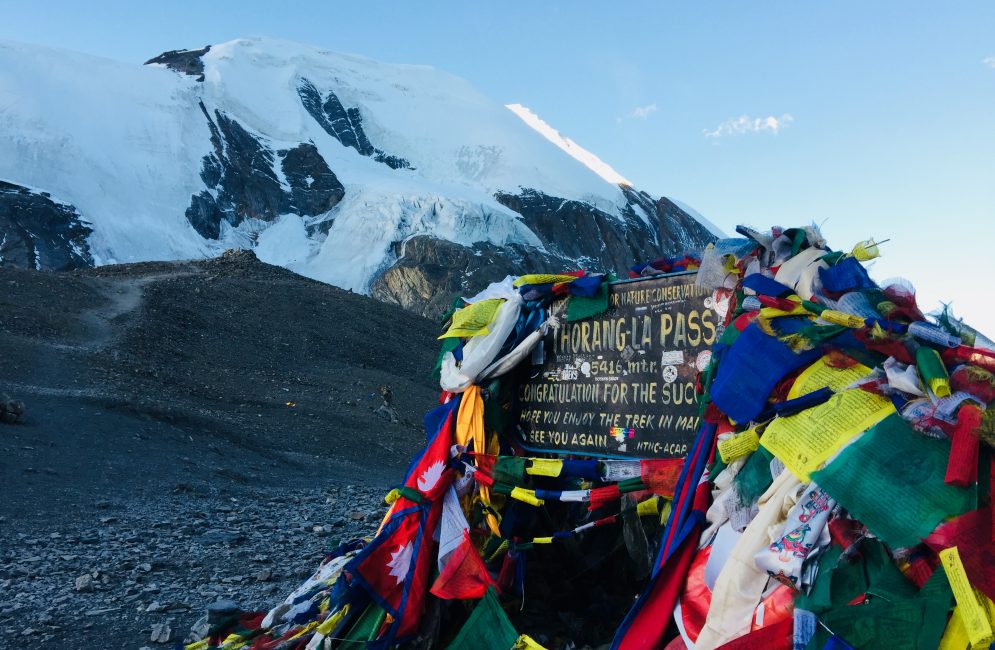
On the eighth day, you will trek from Yak Kharka to Thorong Phedi. The journey is going to be short. But, adventurers can worry less about the day being any less adventurous because though short, your trails will be very steep. After having reached Thorong La Pass, you will proceed towards your hotel and have dinner earlier than on other days while getting ready for your next day’s trek.
Day 9: Trek to Thorong High Camp
Your trek from Thorong Phedi to Thorong High Camp is going to be a short yet very rewarding journey. This is your second day around the Thorong region and a major part of your trek. The high-altitude journey of this day will take you up to 4,925m above sea level. To be successful in your summit, this day plays a major role. You will spend a night in the high camp in a tent.
Day 10: Climb Thorong Peak Summit 6,144 m and Return to Thorong Phedi.
This is one of the most crucial parts of your journey. You will be summiting the Thorong Peak today. The journey will begin at 2 am. Also, you need to carry adequate gear including ropes, crampons, axes, etc. Trekkers will reach the summit after 6 to 7 hours of trekking. Besides the majestic beauty of the Thorong Peak, you can enjoy the views of Annapurna, Dhaulagiri, and Mustang. You will return to a teahouse in Thorong Phedi and spend the night there.
Day 11: Cross Thorong La Pass and Trek to Muktinath
Your morning will start early as you proceed from Thorong La Pass towards Muktinath. You will be passing the famous Thorong La Pass, which is known as one of the most sought yet dangerous passes in the world, on this day. The descent to Muktinath will be rather a long one. After having reached there, you will spend the night in a hotel.
Day 12: Drive to Tatopani via Jomsom & Ghasa
Given you wake up early enough, you can go on a brief tour of Muktinath temple. You will be going to Tatopani via Jomsom, the famous remote bazaar of Nepal, and Ghasa. Trekkers will be driving through Tatopani's hot spring. Trekkers can choose to stop by for a quick bath or dip. You will stay the night in Tatopani.
Day 13: Trek to Ghorepani
You will drive to Pokhara on this day. The same day, you will begin your trek to Ghorepani by noon. The trek is not very long or challenging. The trails are filled with rhododendrons and oak forests. You will be spending the night at a teahouse there.
Day 14: Hike to Poon Hill and Trek to Nayapul and Drive to Pokhara
You will finally push your limits for the last time as you trek from Ghorepani to Nayapul. The journey is not going to be too strenuous. If you want, then you can directly take a bus or a jeep from Ghandruk to Nayapul. Either way, you will reach Pokhara on this day. You will spend the night at a hotel there.
Day 15: Rest Day in Pokhara
Trekkers will get the chance to rest in Pokhara on the seventeenth day. You can spend the morning with a hearty breakfast and a view of the lakeside from your hotel. The afternoon can be spent roaming around the city, boating, kayaking, or simply resting in your hotel rooms. You will spend the night in Pokhara itself.
Day 16: Drive Back to Kathmandu
On this day, you will drive back to Kathmandu. Early morning travel from Pokhara to Kathmandu by a bus, deluxe, or tourist bus, depending on your choice and preference for comfort.
Day 17: Contingency Day in Kathmandu
You can spend a whole day going around the city on this day. The city is full of charms including a wide range of UNESCO World Heritage Sites including Pashupatinath, Swoyambhunath, Boudhanath, Patan Durbar Square, Bhaktapur Durbar Square, Kathmandu Durbar Square, etc. The culinary variation here is just as exceptional. You can buy a few souvenirs to take home from the local markets.
Day 18: Departure
The twentieth day marks the end of your journey. You will be driven to the Tribhuvan International Airport. Our team will bid you farewell and you will be returning to your home country with not just a suitcase full of souvenirs but also a heart full of fond memories from the Himalayan country!
Cost Information
Cost Includes
- All meals(B/L/D) Tea/ Coffee while trekking/climbing as indicated by the itinerary.
- All mountain Tea house / Accommodation.
- All Needed Transportation By Bus and Sharing Jeep.
- Hotel in Kathmandu & Pokhara.
- ACAP Permit and TIMS card.
- Thorong Peak Permit
- English speaking, trained and experienced trekking and climbing Sherpa Guide.
- Porters.
- All insurance for guide and porters.
- Guides and Porters costs including their salary, equipment, transportation, food and teahouse.
- Peak Climbing Permit and Garbage deposit.
- Tents and kitchen equipment.
- Group Climbing equipment (like ropes, Ice-Screw, snow bar….).
- Your Personal Climbing gears (equipment).
- Welcome dinner.
- International Airport drops and pickups.
- All Government and Local taxes.
Cost Excludes
- Your Personal Travel Insurance.
- Personal Expenses (Laundry Service, Phone Calls, Battery Charge, Bar bills, Hot Shower etc.)
- Tips for guide and Porter.
Equipment
FOR HEAD
- Sun hat / Scarf
- Sun glasses and Head light
FOR UPPER BODY
- Water Proof Jacket
- Down Jacket / Warm Jacket
- Light Weight T-shirt (At least 1 pair)
FOR LOWER BODY
- Water Proof Pants
- Running tights
- Light Weight Pant
FOR HAND
- Gloves
FOR FEET
- Thin Inner socks (At least 2 pairs)
- Woolen socks
- Trekking boots (preferred comfortable boots)
OTHER ACCESSORIES
- Sleeping bag
- Water bottle etc
- Suncream
- Water purification tablets
- Toiletries (Toilet paper etc)
- Warm hat
- Trekking Bag Etc.
Other Climbing Equipment
- Harness
- Zummer
- Crampons
- Ice axe
- Plastic boot
- Carabineers
- Helmet etc.